July 10, 2026
The one we hadn't got yet
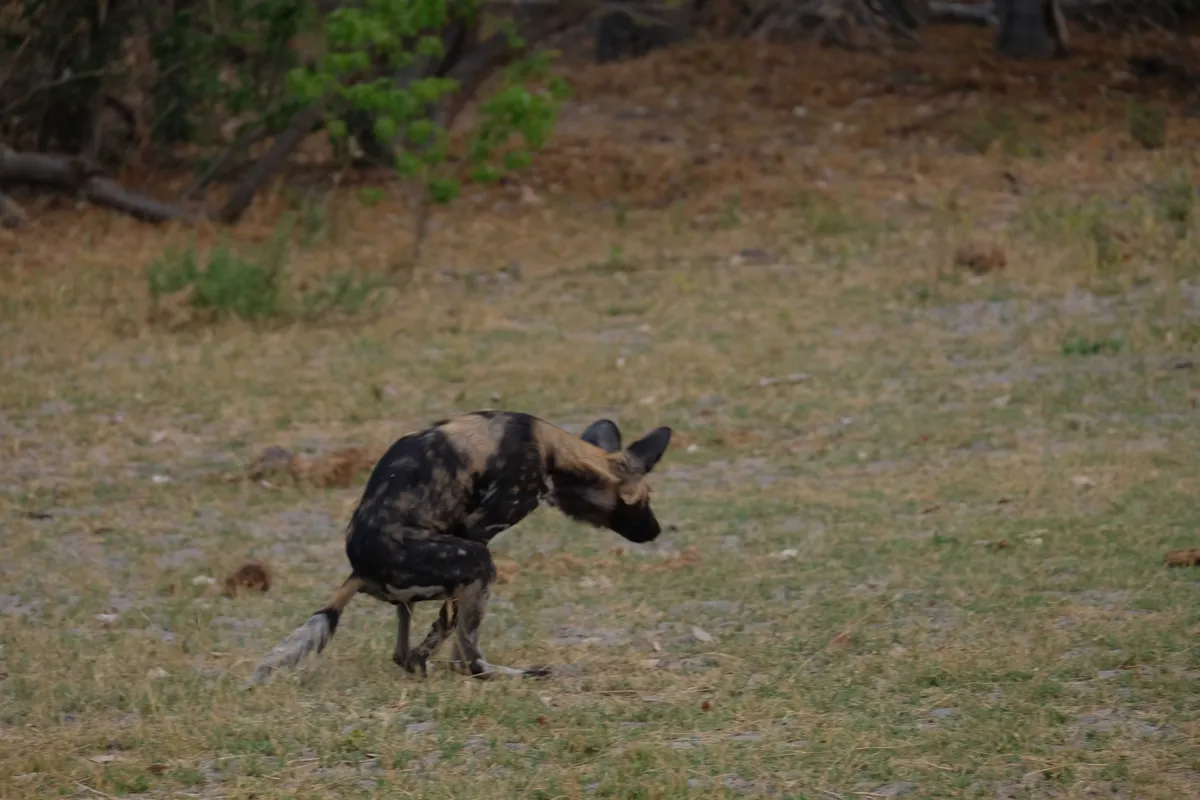
The first springbok we saw, the whole truck stopped for: a single pale speck on a rocky hillside, so far off you could barely tell it was an animal and not just another bush. Didn’t matter. Every camera on board came out for it anyway. The first ostrich got the same treatment, though that one was so far in the distance it barely counted, so really it was the second ostrich we properly stopped for, just to be sure we’d actually seen one. That’s how every trip starts. Everything is new, so everything gets the full reaction, no matter how far away or how little of it you can actually see.
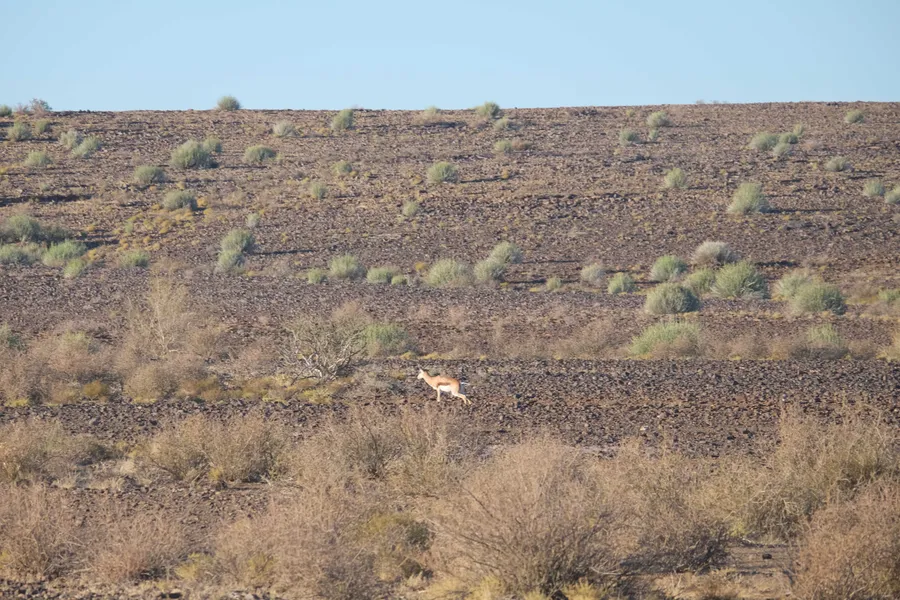
Wild dogs were supposed to be the big one. Our guide made a point of telling us how lucky we were: endangered, unpredictable, most visitors never see them at all. And the first sighting earned every bit of that build-up: a pack resting in dappled shade, those huge satellite-dish ears swivelling at every sound. By the second sighting, a few days later, I noticed we were already talking through it rather than watching it. By the third, if I’m honest, it had started to feel like “oh, wild dogs again,” which felt almost embarrassing to admit about an animal that rare.
Then that third sighting turned into a hunt. The pack scattered an impala herd mid-graze, and one impala broke away from the rest kicking its hind legs out behind it as it ran: this strange, stiff-legged bounding motion, all four feet leaving the ground at once, a move I had never once seen an impala make in two weeks of driving past hundreds of them. It worked. The dogs peeled off. And for about thirty seconds the “rare, exciting” animal and the “seen a hundred of these already” animal were both the most interesting thing in the world at the same time, not because impala had suddenly become special, but because I hadn’t known to expect that, and then I saw it.
Lilac-breasted rollers never went flat like the wild dogs did, and for a while I thought that just meant they were simply better, more reliably beautiful: teal, violet, that improbable flash of electric blue under the wing. But I don’t think that’s actually it. I think it’s that we always knew exactly what we hadn’t got yet: wings fully open, mid-flight, that blue on full display, in focus. Every roller was another go at that one shot, which meant no roller sighting was ever really “another roller.” It was another chance at the thing we were still chasing.
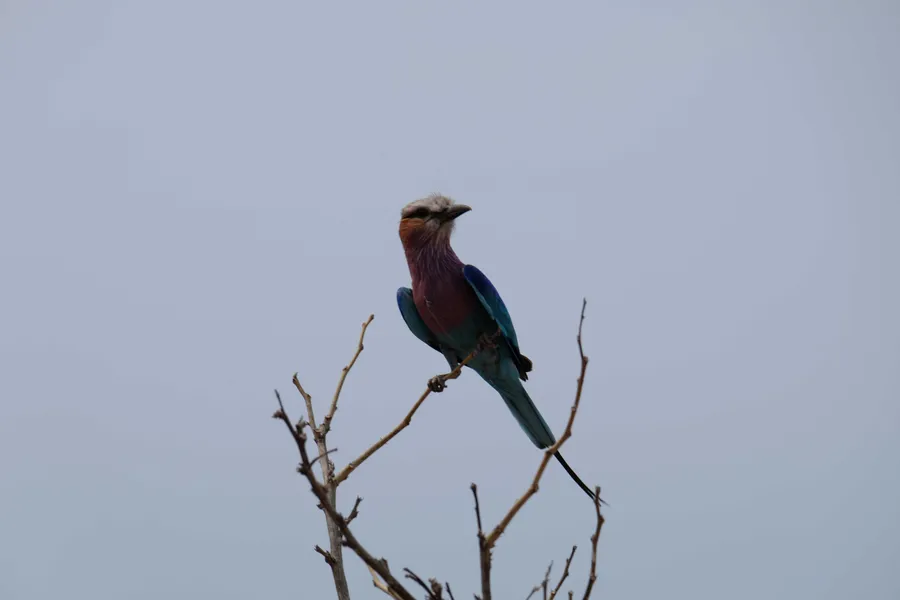
This part was never the hard bit. Holding still, they’d let you get close enough for this. The moment they took off was a different story every time:
Five attempts like that, at least, and I still don’t have the shot. Wings fully open, in focus, that blue actually readable instead of just a streak. Which might be the whole point, looking back: the day I actually get it is probably the day rollers stop being interesting.
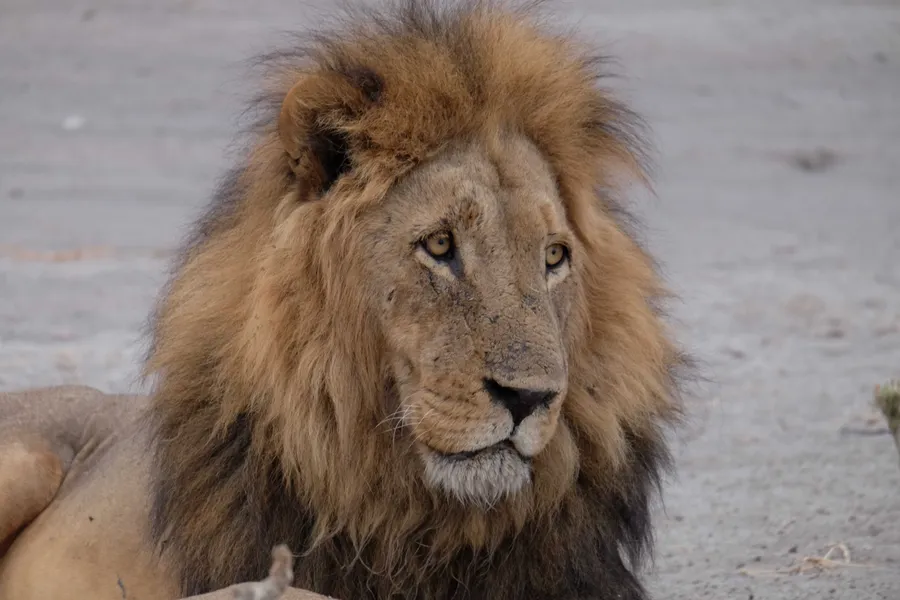
We had a running, half-spoken list of things we still wanted to see lions do, and unlike the rollers, the trip actually ticked most of it off. A cub going properly feral on an adult: all teeth, terrible aim, everyone else in the pride ignoring it completely. Two lions greeting each other like they’d been apart for a year, one pressing its whole head into the other’s shoulder while we idled ten metres away not breathing. The one thing we never got, in the entire two months, was the kill.
We saw the watching plenty of times, though. Three lions sitting dead still under a tree, all facing the exact same direction, ears locked forward on something we couldn’t see from the truck. A lioness low in the grass by a trunk, coiled up small, completely fixed on whatever was out there. Every one of those moments promised a hunt that just never arrived. Whatever they were watching either got away clean, or wandered off, or we simply lost the light before anything happened.
Every lion sighting was a chance at one of those three things (hunt included, even though the hunt never actually paid off), which is probably why none of them ever went flat.
So maybe it was never really about the species at all. It was whether there was still something specific I was hoping for and hadn’t got yet, or something I hadn’t even thought to hope for, waiting to happen anyway. Wild dogs ran out of both: we’d already had the big sighting, and watching them rest again gave us nothing left to hope for and nothing left to be startled by. Impala had nothing to hope for either, right up until they did something nobody was expecting.
We were keeping track of all of it in a Google Keep note on my phone, mostly out of habit: species, rough location, sometimes a line if something felt worth remembering. Looking back at it now, the entries that still mean anything to me are the ones attached to a specific thing that happened, hoped-for or not. Everything else is just a word on a list, which is exactly what I was trying to get away from by going on this trip in the first place.